Contents
Please read through the Respiration-ordinary level web page to get an introduction to this topic.
STAGE 1 – GLYCOLYSIS
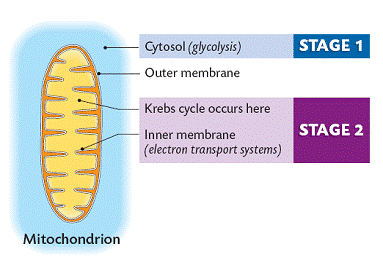
Glycolysis takes place in the cytosol. The cytosol is the clear portion of the cytoplasm. Here is where the enzymes needed for stage 1 are located. This process does not need oxygen.
The process of glycolysis functions to split a glucose molecule into two 3-carbon molecules called pyruvic acid (C3H4O3). Pyruvic acid is a neutral particle. It may also be found as a negatively charged ion called pyruvate. The energy released is used to form 2 ATP molecules + water + 2 NADH molecules.
As stated previously in the ordinary level web page, if there is no oxygen available then anaerobic respiration takes place.

IF OXYGEN IS PRESENT:
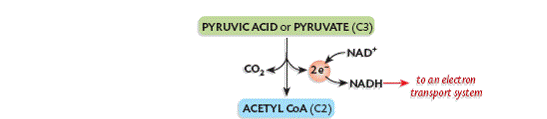
If oxygen is present the pyruvic acid enters the mitochondria. (Recall that glycolysis occurs in the cytosol of the cell.) Here it loses a carbon dioxide molecule and forms a 2-carbon molecule called acetyl coenzyme A (CoA). While forming acetyl CoA it loses two high energy electrons and a proton. These are used to form NADH. The NADH then goes to the electron transport system. (will be discussed later) If oxygen is not present anaerobic respiration takes place.
STAGE 2 – THE KREBS CYCLE
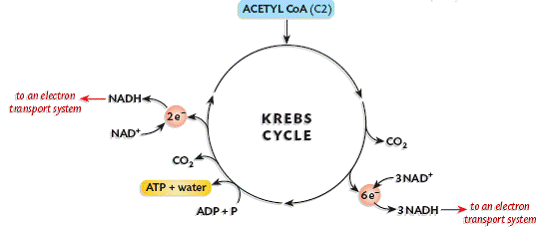
The acetyl CoA now undergoes changes called the Krebs Cycle. The acetyl CoA is broken down to carbon dioxide and protons (H+). The energy contained in the acetyl CoA is released in the form of high energy electrons.
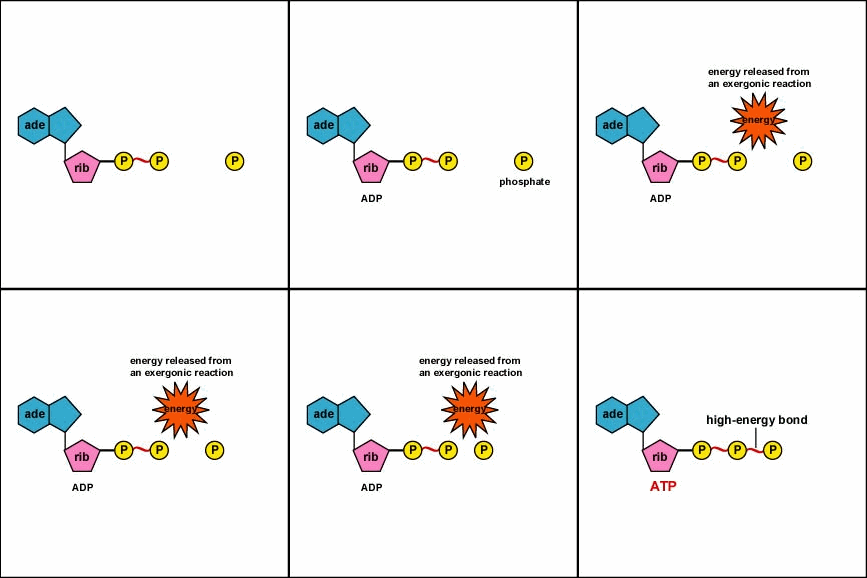
The electrons and protons are picked up by NAD+ to form NADH. The NADH goes into the electron transport system. (will be discussed later) Also phosphorylation occurs where a phosphate group is added to ADP to form ATP.
STAGE 2- THE ELECTRON TRANSPORT SYSTEM
The electron transport system happens in the inner membrane of the mitochondria. Remember that Stage 1 (glycolysis) occurs in the cytosol of the cell.
The electron transport system is composed of a series of proteins that transfer NADH from protein to protein.
With each transfer to a new protein some of the energy in the NADH is released to form ATP. This is done by oxidative phosphorylation. Refer to the Energy for Life web page to review oxidative phosphorylation.
At the end of the electron transport system electrons are used to combine hydrogen with oxygen to form water. If there is no oxygen present the electron transport system cannot operate and therefore the organism will die as a result of the lack of energy (ATP) production.
3 Animations of electron transport in Mitochondria
Animation 1:
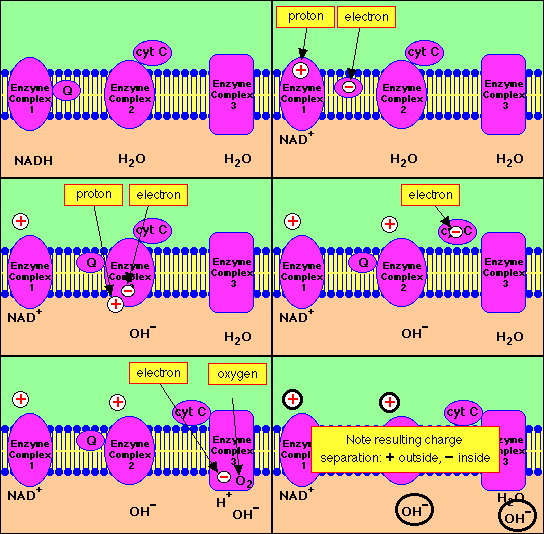
1. Protons are moved across the membrane, from the cytosol to the intermembrane space.
2. Electrons are transported along the membrane, through a series of protein carriers depicted as “Q” and “cyt C” in the diagram.
3. Oxygen is the final electron acceptor, combining with electrons and H+ ions to produce water.
Animation 2:
Recall that a molecule is reduced when it gains and electron and it is oxydized when it loses an electron.
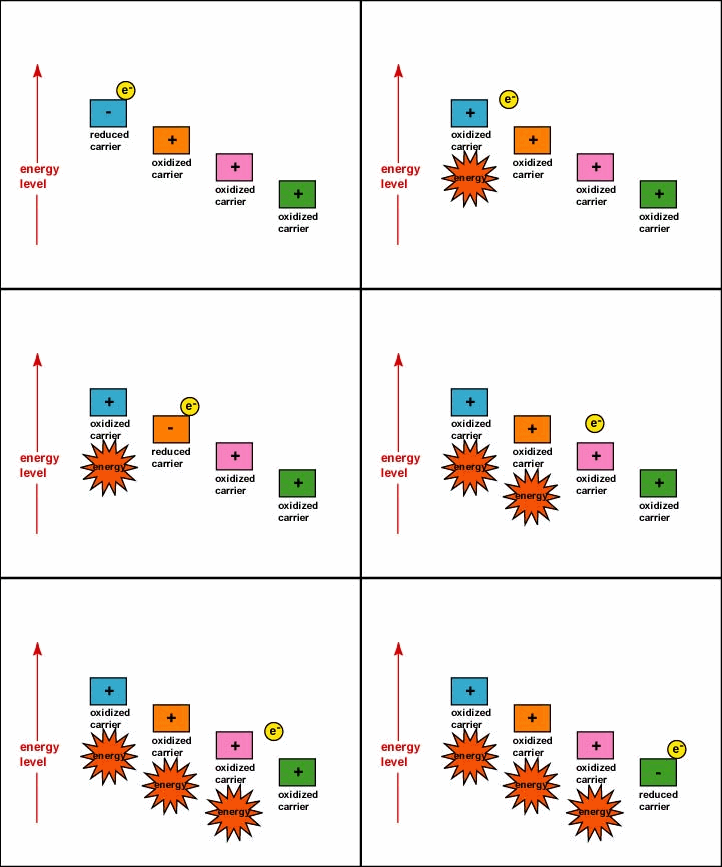
Animation 3:
NADH and carries protons (H+) and electrons (e-) to the electron transport chain located in the membrane. At the end of the electron transport system, two protons, two electrons, and half of an oxygen molecule combine to form water.
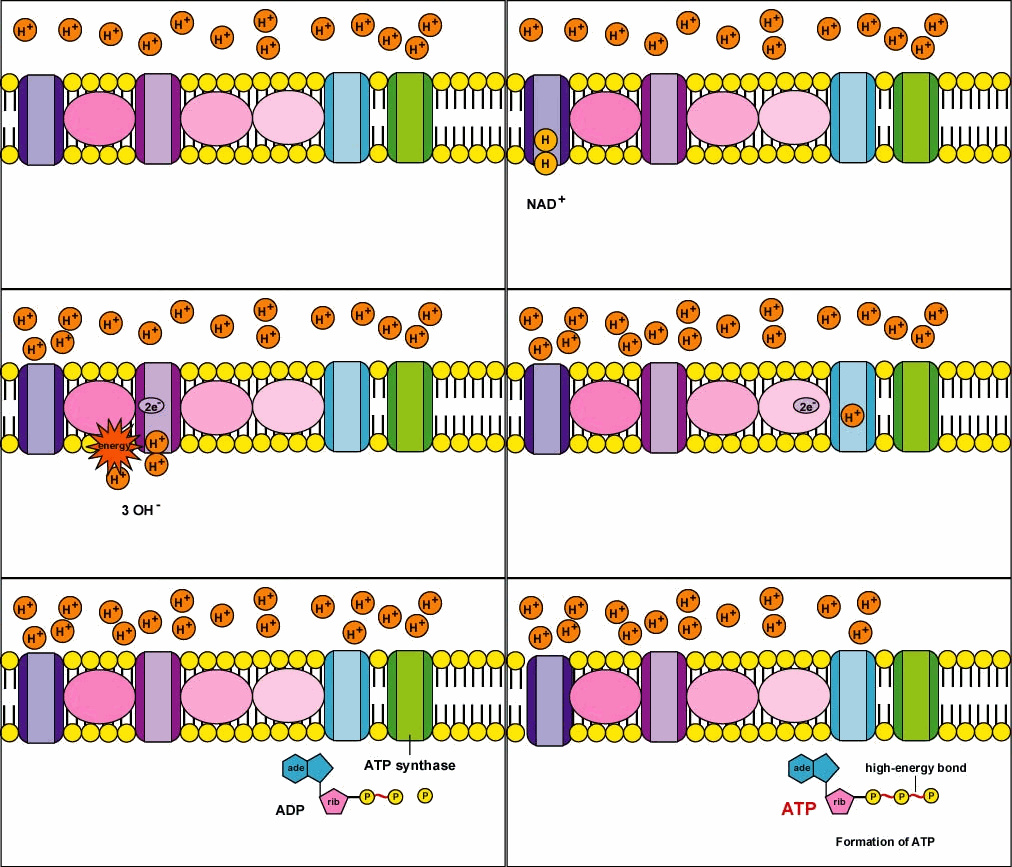
Animation of ATP formation:
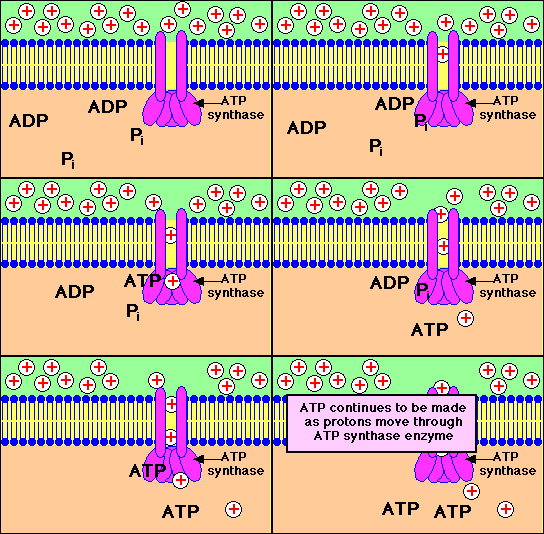
ADP combines with a phosphate group to form ATP. The ATP Synthase is the enzyme used in this process.
USING ATP IN THE CELL
To obtain energy to do cellular work, the cell enzymatically removes the third phosphate from ATP thus releasing the stored energy and forming ADP and phosphate once again.